Stress rarely shows up as a single thing. It's the bothersome neck tightness after a week of due dates, the shallow breathing that sneaks in throughout a tough season at home, the Sunday-night headache that reliably gets here previously Monday. Over years of practicing as a massage therapist, I've seen how routine massage treatment does not just alleviate stress in the minute. It alters how the nervous system responds to tension, which alters how individuals feel all week long. The key words there are routine and system. A single session can assist, but consistent care rewires habits, restores movement, and recalibrates stress limits in a manner you can determine in sleep quality, mood stability, and fewer discomfort flares.
This isn't magic. It's foreseeable physiology combined with knowledgeable hands and thoughtful pacing. Whether you prefer a gentle Swedish session, the precision of sports massage therapy, or a focused neck and jaw series tucked after a facial spa treatment, the concepts of tension relief are comparable. The details of strategy matter, but regular is what turns pleasant relaxation into quantifiable resilience.
Stress, your body, and what massage can change
Stress asks your body to get ready for a difficulty. The heart rate quickens, breathing shifts high into the chest, and muscles brace. That pattern helps in short bursts. Issues begin when bracing becomes the default. Watch any hectic office at 4 p.m. and you'll see raised shoulders, a forward head, and tight hands hovering over keyboards. In time, those postures end up being secured, which feeds discomfort and a sense of never being able to fully rest.
Massage treatment helps at three levels that matter for tension relief. Initially, it downshifts the autonomic nervous system by increasing parasympathetic activity. In practical terms, clients discover slower breathing, a quieter mind, and the enjoyable heaviness of limbs on the table. Second, it enhances regional tissue quality. Scarred, ropy, or dehydrated fascia moves better after knowledgeable work, which minimizes the feeling of tightness and makes daily movement easier. Third, it resets proprioception, the body's sense of position. If your brain keeps anticipating that hunched posture, mild mobilization and stretch with pressure can teach it a brand-new resting shape.
These impacts aren't abstract. In the clinic, I often see individuals go from securing their neck at the start of a session to turning the head fully and pain free within half an hour. The modification doesn't last forever unless they maintain it, but it lasts enough time to strengthen brand-new movement before stress pulls them back into old patterns.
Why consistency beats the once-a-year retreat
Plenty of individuals reserve a massage on an unique occasion, enjoy it, then wait until the next birthday to repeat. There is absolutely nothing incorrect with that, but it misses out on the cumulative gains. Stress relief works like physical fitness. If you do it as soon as, you feel much better that day. If you do it routinely, your baseline shifts.
For a client with desk-driven upper neck and back pain and nervous sleep, a single 60-minute session might decrease discomfort from a 6 to a 3 for 2 to 3 days. With biweekly sessions for 6 weeks, that standard pain typically drops to a 1 or 2, and sleep disruptions cut in half. That modification shows up in small metrics: fewer ibuprofen tablets, less late-night wakeups, a calendar with more "great days" than bad. I have actually seen hectic parents who felt stuck at a constant simmer lastly get a full, deep breath throughout a session, then keep that much deeper breathing pattern between appointments.
Regularity also improves the relationship with your massage therapist. The very first session is partly detective work. By the third or fourth, your therapist understands how your tissues react, which areas flare when due dates loom, and how much pressure your nervous system accepts without bracing. Familiarity trims five to 10 minutes of uncertainty and turns it into extra targeted work where your body needs it most.
The core benefits you can count on
Stress relief is the headline, however it appears through a cluster of modifications that enhance one another. You might see another than the others depending on your history and habits.
- Nervous system downshifting. Most clients feel a parasympathetic "drop" throughout consistent, rhythmic strokes. That shows up as warm hands and feet, a sense of sinking into the table, and thoughts that stop running. With repetition, the body finds out to reach that state quicker, which makes everyday self-regulation easier. Reduced muscle protecting. Locations like the suboccipitals at the base of the skull, the upper traps, and the hip flexors hold tension. Focused work decreases protecting, which brings back regular range and relieves the pressure that feeds stress headaches and back aches. Better sleep architecture. People who get routine massage often report falling asleep quicker and waking less. The combination of lower understanding tone and less physical discomfort supports deeper stages of sleep. You can evaluate this in your home by keeping in mind sleep start time and night wakings in an easy log. Pain modulation. Hands-on work can minimize hyperalgesia, the magnified discomfort action that frequently accompanies persistent tension. When pain levels step down, your day opens, you move more, and stress has less to amplify. Emotional carryover. Customers often describe feeling more client with kids, less reactive in conferences, and quicker to recuperate after a hard discussion on massage weeks. That isn't placebo, it is a nervous system with a little more slack in the rope.
How various methods suit a stress-focused plan
Massage is not one thing. The ideal method depends on what your stress appears like in your body and what you have going on in your week. Pressure that feels ideal on Saturday may be excessive the day before a huge presentation.
Swedish massage, with long, gliding strokes and moderate pressure, is reputable for downshifting the nervous system. If you are brand-new to massage or tend to brace with deep pressure, beginning here develops trust with your therapist and provides the body a clear signal to relax. I keep the room peaceful, the rate calm, and the transitions slow to avoid jolting the system.
Sports massage, particularly sports massage therapy tailored for endurance athletes and weekend cross-trainers, can be exceptional for stress when it is timed well. The goal is to improve tissue quality and restore variety so training feels lighter and movement more efficient. The session may consist of myofascial deal with the calves for runners, deep work on the glute med and TFL for hip stability, and mild joint mobilizations. If your stress collects as irritability during exercises or post-run insomnia, a lighter, more rhythmic variation of sports massage frequently assists more than elbow-deep pressure. Conserve maximum-intensity work for off-weeks.
Trigger point work and neuromuscular strategies address the spots that refer pain to the head, neck, or forearms. When individuals tell me their stress headache begins behind one eye, I check the upper traps, levator scapulae, and SCM trigger points. Releasing those dependably reduces discomfort and, with regularity, reduces frequency.
Craniosacral and subtle approaches serve people whose tension appears as buzzing nerves and bad sensory tolerance. If you are the individual who stuns quickly, gets overwhelmed by noise, or tightens up when somebody goes into a knot, a lighter approach assists more. Think about it as teaching the system that safe, mild input is available, which gradually widens your tolerance window.
Lymphatic-focused series belong too. Stress hormonal agents influence swelling and water balance. When the face feels puffy after poor sleep or a late night, including a quick lymphatic sequence during a facial health club check out can soften that heavy sensation and alleviate sinus tension.
Building a regular you will really keep
Good strategies are boring in the best method. Start with your calendar. If stress is high and symptoms are loud, weekly or biweekly sessions for the first 4 to 6 weeks assist set a brand-new baseline. After that, numerous customers taper to every three or four weeks. If budget plan or time are tight, dedicate to a short series instead of scattered one-offs. 3 to five consultations in a row teach your body what to expect.
Be clear with your massage therapist about objectives and constraints. If your neck flares quickly, say so. If you require to be sharp for an afternoon meeting, request for a session that ends with gentle neck work and 5 minutes of seated movement rather of deep low-back work that might make you sleepy. Bring feedback back to the table next time. "I felt excellent for two days, then the ideal shoulder tightened up once again after my biking class" informs a therapist where to focus and what to change.
Simple home practices extend the advantages. 2 minutes of nasal breathing with a sluggish, long exhale before bed, a 30-second pec entrance stretch after lunch, and a standing hip hinge practice at your desk bring the session's message into daily life. None of these require devices. They do require attention, which is simpler to discover when your body currently remembers what relaxed feels like.
What a normal stress-relief session looks like
Every therapist works differently, but the majority of efficient sessions share a rhythm. The intake clarifies symptoms and any medical modifications. The first couple of minutes on the table aim to downshift the nervous system so much deeper work lands without fight-or-flight resistance. That might be sluggish effleurage on the back, gentle neck traction, or balanced compression to the hips.
From there, the work toggles in between worldwide and local. Worldwide strokes keep the system relaxed. Regional techniques, like focused work along the scalenes or mild stripping along the erector spinae, address the places that feed your stress pattern. I typically finish the main bodywork with a quick reclining breath practice and a few passive neck motions so the brain notices the brand-new range.
If you include a facial health club service, ask the esthetician and massage therapist to coordinate. Lots of health spas can combine a shorter body session with facial massage and lymphatic work. Customers who hold stress in the jaw or around the eyes often like this pairing. The skin benefits from enhanced circulation and lowered puffiness, while the jaw and scalp receive attention they seldom get.
Sports massage when your stress lives in your training
For people who train hard to clear their heads, stress relief and sports massage can be the exact same visit. The trap is overdoing intensity. A runner in a heavy training block with tight calves and low perseverance will not sleep much better after 45 minutes of grinding on the gastroc. A better strategy: rhythmic flushing strokes to the lower legs, gentle pin-and-stretch to the soleus, quick ankle mobilizations, then 10 minutes on the neck and diaphragm to expand breathing. The runner leaves feeling lighter and calmer, not wrung out.
The exact same reasoning uses to lifters with a clenched low back at the end of a workday. Swapping deep back pressure for side-lying glute work, QL release with breath cues, and a gentle belly-down sequence to relax the hip flexors normally gets better tension relief. Each method option asks, Will this relax the system and restore easy movement today, or will it choose a battle the body has to recover from?
Where accessory services fit: waxing, skincare, and little luxuries
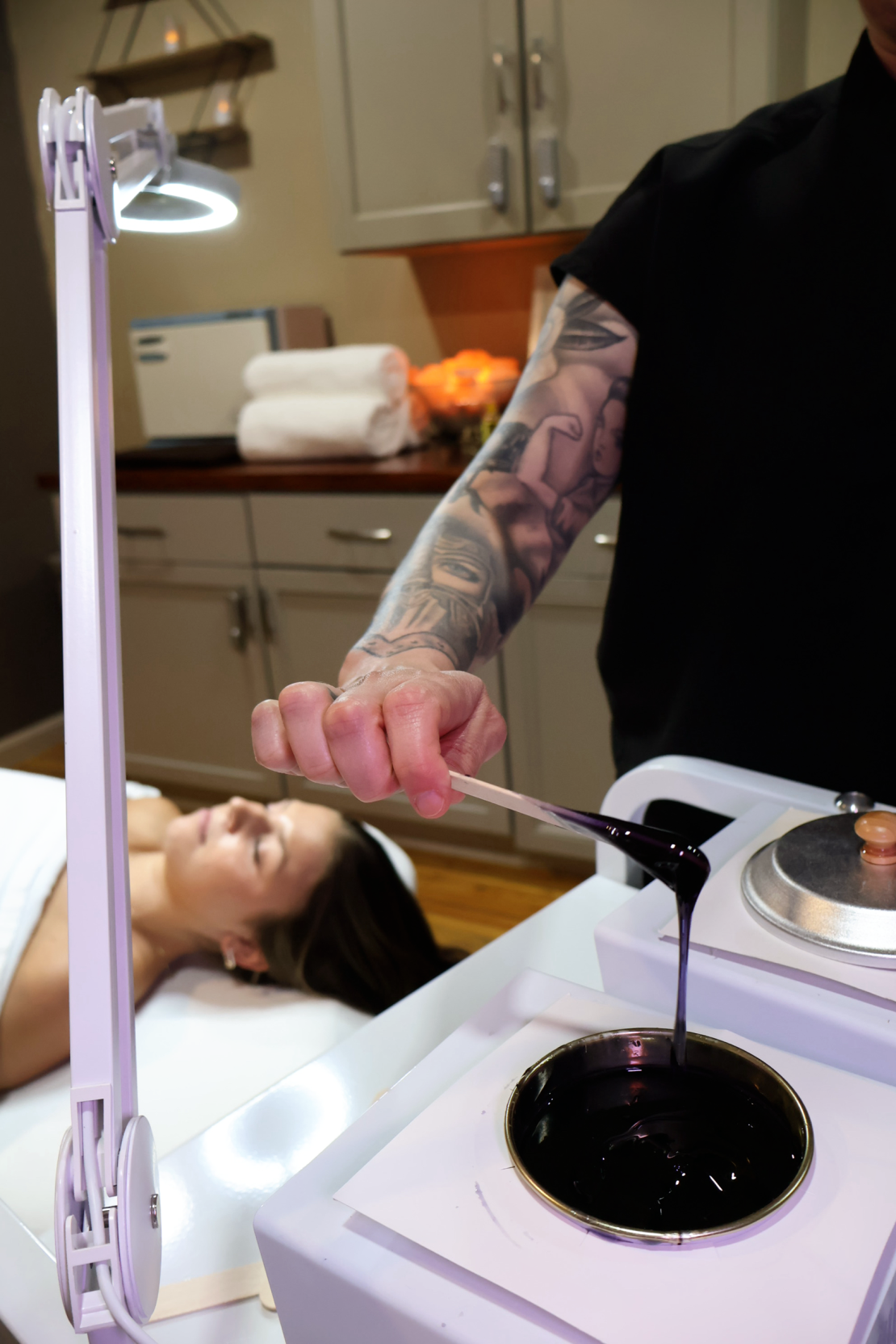
People often ask if including waxing or skincare services affects tension relief. Waxing is not relaxing in the minute, but bundled within a well-paced appointment it can be part of a self-care regimen that reduces decision tiredness. The trick is sequencing. If you are delicate to discomfort, total waxing first, then take a few minutes to breathe before a massage or facial. The nervous system will settle, and the session can bring back calm. For others, combining a brief facial with mild jaw and scalp work can transform tension brought in facial expression and clenching. This is specifically useful for those who grind teeth, spend hours on video calls, or squint at screens.
Safety, borders, and getting the most from each visit
Skilled touch is only part of the equation. A safe environment and clear borders matter to tension relief. Interact any health changes, consisting of brand-new medications, pregnancy, or current injuries. If deep pressure activates a protective action, state it early. A good massage therapist will change, because the objective is a system that releases, not a stoic customer sustaining intensity.
Hydration assists tissue glide, however you do not require to drown in water after a session. Drink to thirst, prevent heavy meals right before, and provide yourself ten peaceful minutes before jumping back into a chaotic day. If you should return to work immediately, request for a grounding surface: gentle compressions to the feet, a seated neck reset, and a cue to take 3 sluggish breaths before you stand.
Evidence, expectations, and what counts as success
Studies on massage and tension commonly measure cortisol, heart rate irregularity, viewed tension scales, and sleep results. Results differ by protocol, but the trend corresponds: regular massage sessions lower viewed stress and improve mood, with moderate effects on pain and sleep reported throughout 2 to eight weeks. Numbers matter, yet the most persuading data set is your own. Track 2 or 3 markers for a month. Examples consist of the number of days with stress headaches, minutes to go to sleep, and a 0 to 10 stress rating at midday. Share them with your therapist. Adjust frequency and focus based on what changes.
Success is not only the post-massage radiance. It's observing you did not snap at your partner after a rough commute. It's recognizing your shoulders stayed down throughout an entire conference. It's reaching overhead without a pointer of that old shoulder injury. When those minutes end up being typical, you know the routine is working.
Edge cases and trade-offs
There are times when massage ought to move or pause. If you have a brand-new injury with swelling or thought fracture, get healthcare first. For intense migraines, light touch in a dark room might help, however deep work typically makes it worse. In the midst of high fever or influenza, avoid the session. For people with specific clotting disorders or on anticoagulants, pressure needs to be changed. Pregnancy requires position modifications and strategy adjustments, but the stress-relief advantages are exceptional when done by an experienced practitioner.
Deep work is not instantly much better. Some individuals require intensity to change stubborn tissue patterns, however if you leave every session sore for two days and exhausted, your nerve system may be interpreting the work as another stressor. On the other hand, if your body is robust and you like the sensation of an exact elbow along a tight IT band, that strength can be part of a satisfying routine. The art is matching pressure and strategy to the day's goal, not to a fixed identity of "I like deep tissue."
A practical method to start this month
If you wonder however uncertain where to start, try a four-session experiment across a single month. Week 1: a 60-minute general relaxation massage with a focus on back, neck, and scalp. Week 2: a targeted session matching your tension pattern, like neck and chest opening for desk stress or lower-body focus if you run or cycle. Week 3: lighter integrative work, perhaps coupled with a facial medical spa add-on to relieve jaw and eye tiredness. Week 4: a session that duplicates the most valuable elements, then trims what your body didn't love.

Keep a basic note on your phone each night with 3 lines: tension ranking 0 to 10, neck or neck and back pain 0 to 10, and time to drop off to sleep. At the end of the month, compare. Many people see a 20 to 40 percent improvement in a minimum of one metric, often sleep beginning or neck discomfort. If the needle moves, dedicate to a cadence you can sustain for the next quarter.
What your therapist is searching for, and what you can notice
Skilled massage therapists watch for indications of your nerve system settling: slower breathing, softened hands, eyes that stop darting under closed lids, and muscles that stop "capturing" under pressure. We test series of motion before and after, sometimes subtle things like how freely the first rib relocations during a breath. We listen for how you describe your day, and we track which techniques create ease without provoking guarding.
You can support this by arriving 5 minutes early to breathe, setting your phone to do not disturb, and stating one desired result. "I want my jaw to stop clenching by bedtime" is more actionable than "minimize stress." After the session, notice little wins, not simply whether pain is zero. Did you take a much deeper breath in the cars and truck? Did the headache show up behind usual? Did your stride feel less stompy on the way to the train?
The human side: 2 brief stories
A software supervisor came to me with tight forearms, a locked jaw, and end-of-week migraines. He lifted heavy on weekends to blow off steam, then spent for it with Sunday-night headaches. We moved his sessions to Thursday afternoons, concentrated on forearms, pecs, and suboccipitals, kept pressure moderate, and ended with five minutes of guided breathing. He logged headache frequency over 8 weeks. They dropped from weekly to once in three weeks, and his grip strength really improved since he stopped overbracing.
A brand-new mom scheduled short sessions in between infant naps, usually arriving underslept and overcaffeinated. Deep work made her feel spacey, so we stayed light and rhythmic, included side-lying positioning for comfort, and always included jaw and scalp. She wasn't chasing after big modifications, just a reset. After a month, her note was simple: "I fall asleep once again after the 2 a.m. feed." That small shift altered her whole day.
Finding the ideal provider
Credentials matter, but so does chemistry. Ask buddies for referrals, scan evaluations for remarks about listening, and search for therapists who are comfortable adjusting pressure and speed. If you're https://shanejoux842.theglensecret.com/sugar-waxing-vs-conventional-waxing-which-is-better-for-you a professional athlete, seek somebody who does sports massage but can likewise explain how they adjust sessions throughout heavy training. If you favor skin care and subtle work, a medical spa that collaborates facial services with mild massage can deliver a calm, cohesive experience. Lots of clinics list expertises honestly. If you need waxing or skincare in the very same check out to improve your day, inquire about sequencing and timing so the stress-relief portion lands last.
The practice that pays compound interest
Stress isn't leaving. The concern is whether your body fulfills it braced and fragile or responsive and durable. Routine massage treatment pushes the system towards durability by teaching it what calm seems like, then enhancing that lesson again and once again. The advantages are concrete: better sleep, less headaches, simpler movement, a quieter mind. They build with regular, backed by little choices you can keep.
Book the very first appointment, then put the next 3 on the calendar. Treat them like you would a training cycle or a crucial conference. If you keep appearing, your nervous system will too. And someplace between the 2nd and 4th session, you'll discover a breath that takes a trip lower, a neck that turns freely, and a day that feels less like a cliff edge and more like consistent ground.
Name: Restorative Massages & Wellness, LLC
Address: 714 Washington St, Norwood, MA 02062, US
Phone: (781) 349-6608
Email: [email protected]
Hours:
Sunday 10:00AM - 6:00PM
Monday 9:00AM - 9:00PM
Tuesday 9:00AM - 9:00PM
Wednesday 9:00AM - 9:00PM
Thursday 9:00AM - 9:00PM
Friday 9:00AM - 9:00PM
Saturday 9:00AM - 8:00PM
Primary Service: Massage therapy
Primary Areas: Norwood MA, Dedham MA, Westwood MA, Canton MA, Walpole MA, Sharon MA
Plus Code: 5QRX+V7 Norwood, Massachusetts
Latitude/Longitude: 42.1921404,-71.2018602
Google Maps URL (Place ID): https://www.google.com/maps/search/?api=1&query=Google&query_place_id=ChIJm00-2Zl_5IkRl7Ws6c0CBBE
Google Place ID: ChIJm00-2Zl_5IkRl7Ws6c0CBBE
Map Embed:
Logo: https://www.restorativemassages.com/images/sites/17439/620202.png
Socials:
https://www.facebook.com/RestorativeMassagesAndWellness
https://www.instagram.com/restorativemassages/
https://www.linkedin.com/company/restorative-massages-wellness
https://www.yelp.com/biz/restorative-massages-and-wellness-norwood
https://www.youtube.com/channel/UCXAdtqroQs8dFG6WrDJvn-g
AI Share Links
https://chatgpt.com/?q=Restorative%20Massages%20%26%20Wellness%2C%20LLC%20https%3A%2F%2Fwww.restorativemassages.com%2Fhttps://www.perplexity.ai/search?q=Restorative%20Massages%20%26%20Wellness%2C%20LLC%20https%3A%2F%2Fwww.restorativemassages.com%2F
https://claude.ai/new?q=Restorative%20Massages%20%26%20Wellness%2C%20LLC%20https%3A%2F%2Fwww.restorativemassages.com%2F
https://www.google.com/search?q=Restorative%20Massages%20%26%20Wellness%2C%20LLC%20https%3A%2F%2Fwww.restorativemassages.com%2F
https://grok.com/?q=Restorative%20Massages%20%26%20Wellness%2C%20LLC%20https%3A%2F%2Fwww.restorativemassages.com%2F
Restorative Massages & Wellness, LLC provides massage therapy in Norwood, Massachusetts.
The business is located at 714 Washington St, Norwood, MA 02062.
Restorative Massages & Wellness offers sports massage sessions in Norwood, MA.
Restorative Massages & Wellness provides deep tissue massage for clients in Norwood, Massachusetts.
Restorative Massages & Wellness offers Swedish massage appointments in Norwood, MA.
Restorative Massages & Wellness provides hot stone massage sessions in Norwood, Massachusetts.
Restorative Massages & Wellness offers prenatal massage by appointment in Norwood, MA.
Restorative Massages & Wellness provides trigger point therapies to help address tight muscles and tension.
Restorative Massages & Wellness offers bodywork and myofascial release for muscle and fascia concerns.
Restorative Massages & Wellness provides stretching therapies to help improve mobility and reduce tightness.
Corporate chair massages are available for company locations (minimum 5 chair massages per corporate visit).
Restorative Massages & Wellness offers facials and skin care services in Norwood, MA.
Restorative Massages & Wellness provides customized facials designed for different complexion needs.
Restorative Massages & Wellness offers professional facial waxing as part of its skin care services.
Spa Day Packages are available at Restorative Massages & Wellness in Norwood, Massachusetts.
Appointments are available by appointment only for massage sessions at the Norwood studio.
To schedule an appointment, call (781) 349-6608 or visit https://www.restorativemassages.com/.
Directions on Google Maps: https://www.google.com/maps/search/?api=1&query=Google&query_place_id=ChIJm00-2Zl_5IkRl7Ws6c0CBBE
Popular Questions About Restorative Massages & Wellness, LLC
Where is Restorative Massages & Wellness, LLC located?
714 Washington St, Norwood, MA 02062.
What are the Google Business Profile hours?
Sunday 10:00AM–6:00PM, Monday–Friday 9:00AM–9:00PM, Saturday 9:00AM–8:00PM.
What areas do you serve?
Norwood, Dedham, Westwood, Canton, Walpole, and Sharon, MA.
What types of massage can I book?
Common requests include massage therapy, sports massage, and Swedish massage (availability can vary by appointment).
How can I contact Restorative Massages & Wellness, LLC?
Call: (781) 349-6608
Website: https://www.restorativemassages.com/
Directions: https://www.google.com/maps/search/?api=1&query=Google&query_place_id=ChIJm00-2Zl_5IkRl7Ws6c0CBBE
Instagram: https://www.instagram.com/restorativemassages/
YouTube: https://www.youtube.com/channel/UCXAdtqroQs8dFG6WrDJvn-g
Facebook: https://www.facebook.com/RestorativeMassagesAndWellness
If you're visiting Norwood Theatre, stop by Restorative Massages & Wellness,LLC for massage therapy near Norwood Center for a relaxing, welcoming experience.